Call us: 905-922-1214


Running a safe, compliant fleet shouldn’t feel overwhelming
That’s why CVOR Minute delivers bite-sized, practical insights to help carriers, safety managers, and drivers boost compliance, cut roadside risks, and stay audit-ready — all in under a minute.
In Vol. 2, we turn the spotlight on CVOR Brake Defects – Top Roadside Failures — one of the most common weak points that can damage your CVOR score and put fleets out of service.
Each week, we break down a real compliance challenge and show you how to stay ahead of it — clear, actionable, and focused on keeping your fleet safe and on the road.
Brake Defects: The Top Fleet Killer in CVOR Compliance
Brake issues aren’t just maintenance concerns — they are the single biggest cause of Out-of-Service orders. From air leaks and worn pads to out-of-adjustment brakes, these defects continue to ground more trucks than any other violation. Staying ahead with solid pre-trips, thorough shop inspections, and immediate repairs is the key to protecting your CVOR score and keeping your fleet on the road.
Why It Matters
Inspectors know that faulty brakes are a top contributor to crashes, which is why they consistently rank among the most cited Out-of-Service failures. According to the Commercial Vehicle Safety Alliance, brake violations make up the largest share of roadside OOS orders each year.
Brake systems are critical for safe operations. As a result, even a small defect can quickly become a major violation at roadside. Inspectors know that faulty brakes are a top contributor to crashes, which is why they consistently rank among the most cited Out-of-Service failures
Common Brake Defects Found at Roadside
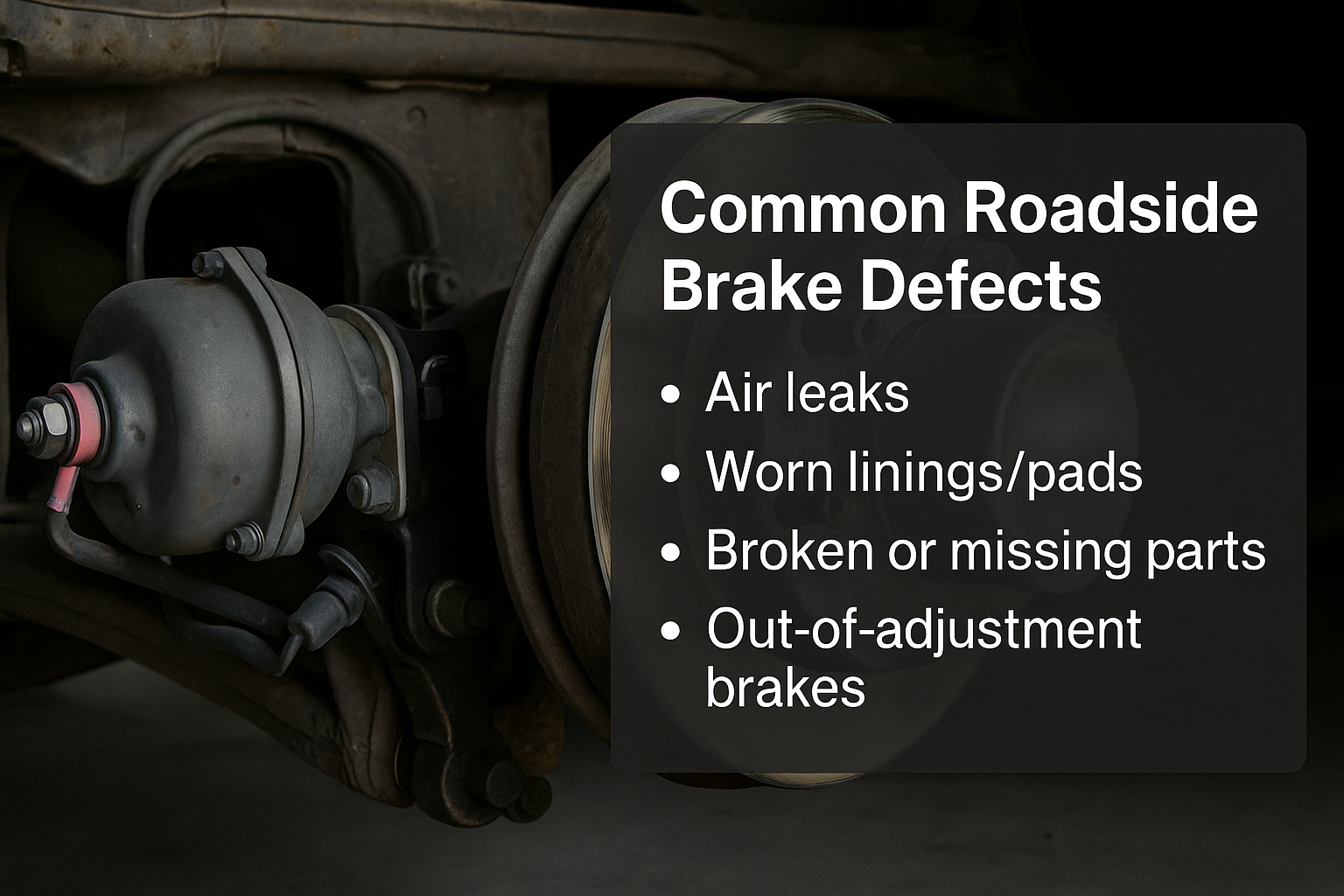
During inspections, officers regularly identify issues such as:
- Air leaks or low air pressure
- Broken, missing, or contaminated brake components
- Worn or out-of-adjustment brake linings and pads
- Defective brake chambers or slack adjusters
For example, a single brake chamber out of adjustment may be recorded as a defect. However, multiple issues across an axle can quickly result in an Out-of-Service order.
“Every OOS violation = CVOR points = higher insurance.
Impact on Your CVOR
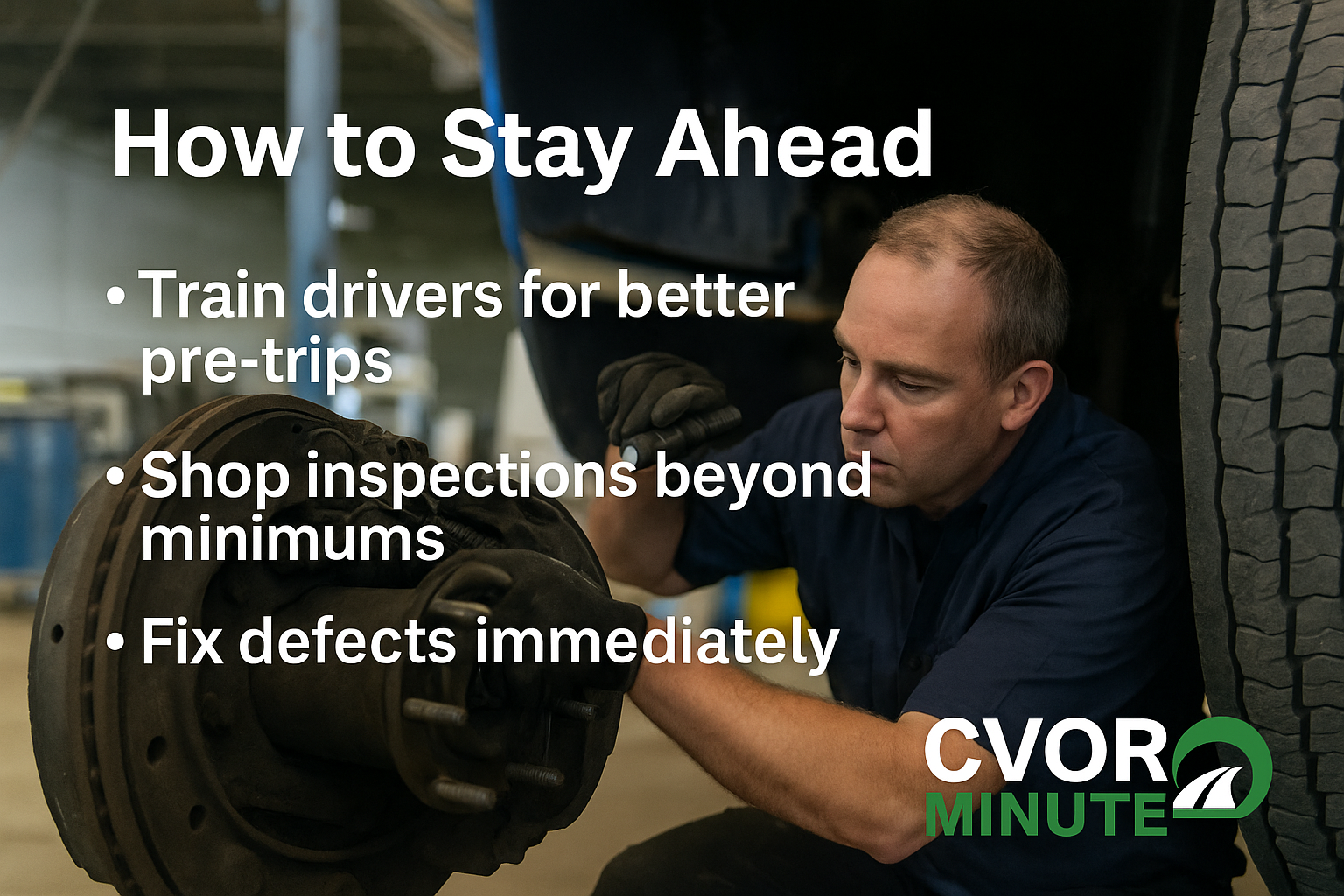
- Train drivers to recognize air leaks, worn components, and low air pressure during pre-trips.
- Ensure regular shop inspections with proper brake adjustment checks.
- Address minor defects immediately, before they escalate.
- Keep detailed maintenance files to show auditors proactive compliance.
- Moreover, scheduling periodic brake inspections beyond minimum requirements demonstrates to insurers and customers that safety is a priority.
- Every brake violation — whether minor or major — goes directly onto your CVOR record. The Ontario Ministry of Transportation outlines how these violations add points that affect your safety rating
Take Action Today
Brake defects don’t just affect a single trip — they can derail your CVOR profile and reputation. Therefore, building strong inspection and maintenance programs is critical to reducing roadside failures.
👉 Want to know how your fleet’s brake performance looks on paper? [Get your free Out-of-Service snapshot today]
Raising the Standard, One Minute at a Time.eady to see how your fleet measures up?
Get your free OOS snapshot today