Call us: 905-922-1214

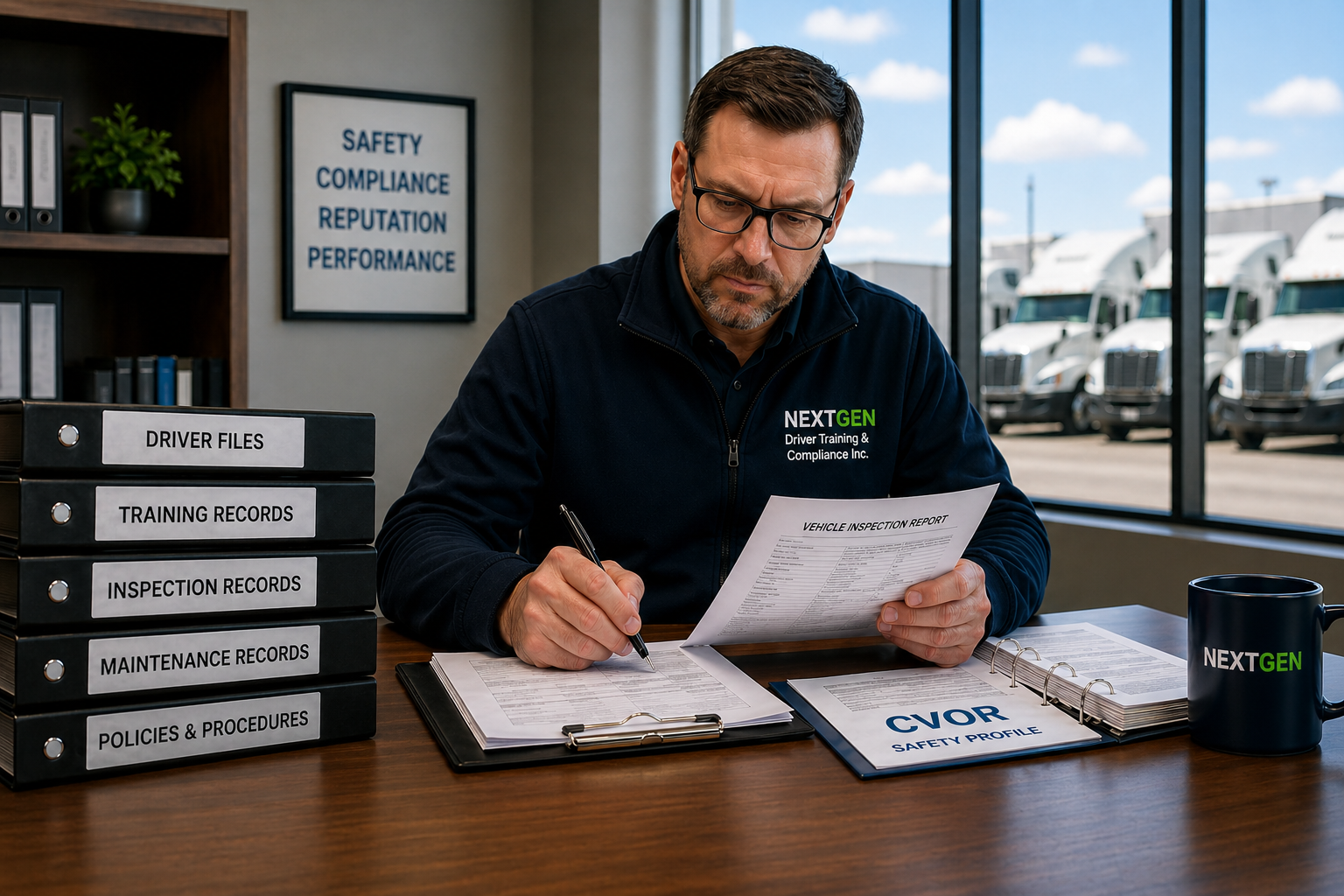
Most fleets do not realize they have a CVOR problem until someone else points it out.
Sometimes it is MTO.
Sometimes it is an insurance company.
Sometimes it is a customer.
Sometimes it is a roadside inspection.
Sometimes it is a collision investigation.
By then, the fleet is no longer controlling the conversation.
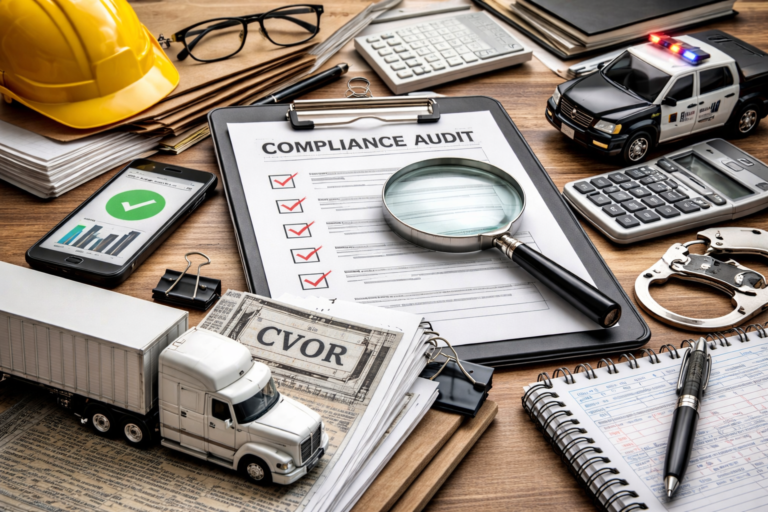
That is why a CVOR mock audit matters.
It gives a fleet owner the opportunity to understand where the company may be exposed before those weaknesses show up in an audit, insurance review, enforcement action, or public-facing CVOR record.
Your CVOR Is Not Just an Internal Compliance File
Many small and mid-sized fleets still treat CVOR compliance like an internal paperwork issue.
That is a mistake.
Ontario’s CVOR program monitors and evaluates commercial vehicle operators using safety-related information such as fleet size, kilometers travelled, collisions, convictions, inspections, and facility audit results. The program is not based on opinion. It is based on recorded performance data.
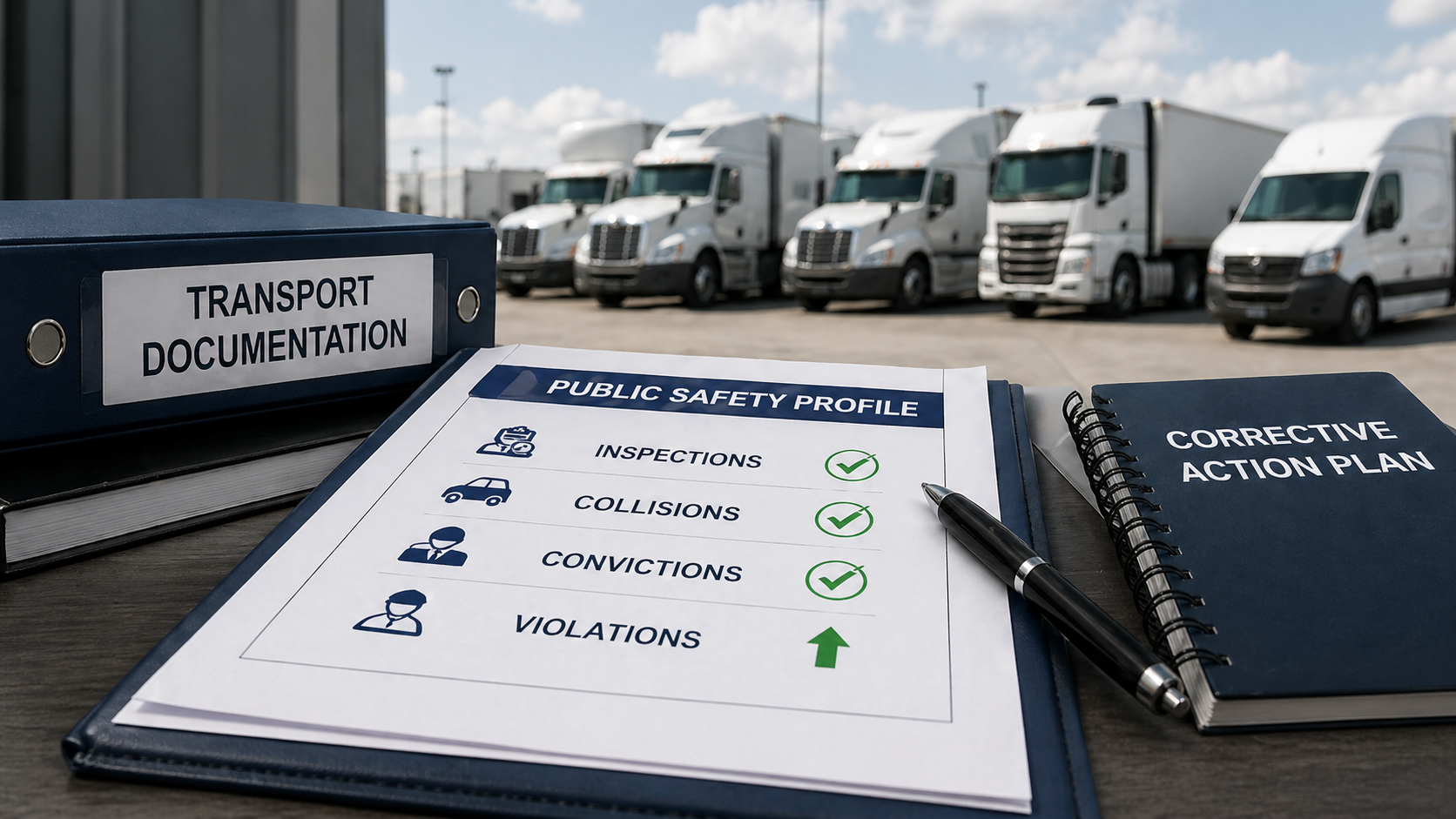
A CVOR abstract also summarizes a carrier’s safety performance, including collisions, convictions, and inspections.
That means your fleet’s compliance performance does not live quietly in a binder. Parts of your safety profile can be reviewed, requested, measured, and questioned.
For companies that rely on insurance coverage, customer trust, contracts, municipal work, utility work, or public reputation, that matters.
The Public Exposure Problem
Fleet owners often underestimate how visible their safety profile can become.
A Level 1 public CVOR abstract provides a summary of a carrier’s record and can be available to the general public, while a Level 2 abstract provides more detailed carrier information to the carrier or authorized agent.
That is where the risk becomes bigger than paperwork.
A poor CVOR profile can raise questions:
Why are there repeated inspections?
Why are defects showing up?
Why are convictions appearing?
Why is the violation rate increasing?
Why has the rating changed?
Why does the company appear reactive instead of controlled?
Those questions may come from enforcement, insurers, brokers, customers, lawyers, or business partners.
The problem is not only whether the company is operating safely.
The problem is whether the company can prove it has control.
Why “We Think We’re Compliant” Is Not Good Enough
Most fleets that call for help are not trying to be unsafe.
The issue is usually more practical.
The company is busy.
The owner wears too many hats.
Drivers are trusted to handle paperwork.
Maintenance is being done, but the records are scattered.
Policies exist, but nobody has reviewed them in years.
Training happens informally.
Corrective action is discussed, but not always documented.
From the inside, the fleet may feel reasonably organized.
From the outside, it may look exposed.
That is the difference a mock audit is meant to reveal.
A proper CVOR mock audit is not about embarrassing the company. It is about giving ownership a clear, independent view of where the fleet stands before an official review or incident forces the issue.
Facility Audits Can Affect Your Record
A CVOR facility audit is not just a paperwork appointment.
Facility audit results form part of the carrier’s safety performance picture, along with collisions, convictions, and inspections.
That is why waiting until an audit letter arrives is poor risk management.
By that point, the fleet may be trying to repair months or years of weak documentation under pressure.
A mock audit allows the business to step back and ask:
Are our records consistent?
Do our files support what we say we do?
Would our documentation hold up under review?
Are we managing compliance, or are we assuming it is being handled?
Those are business questions, not just compliance questions.
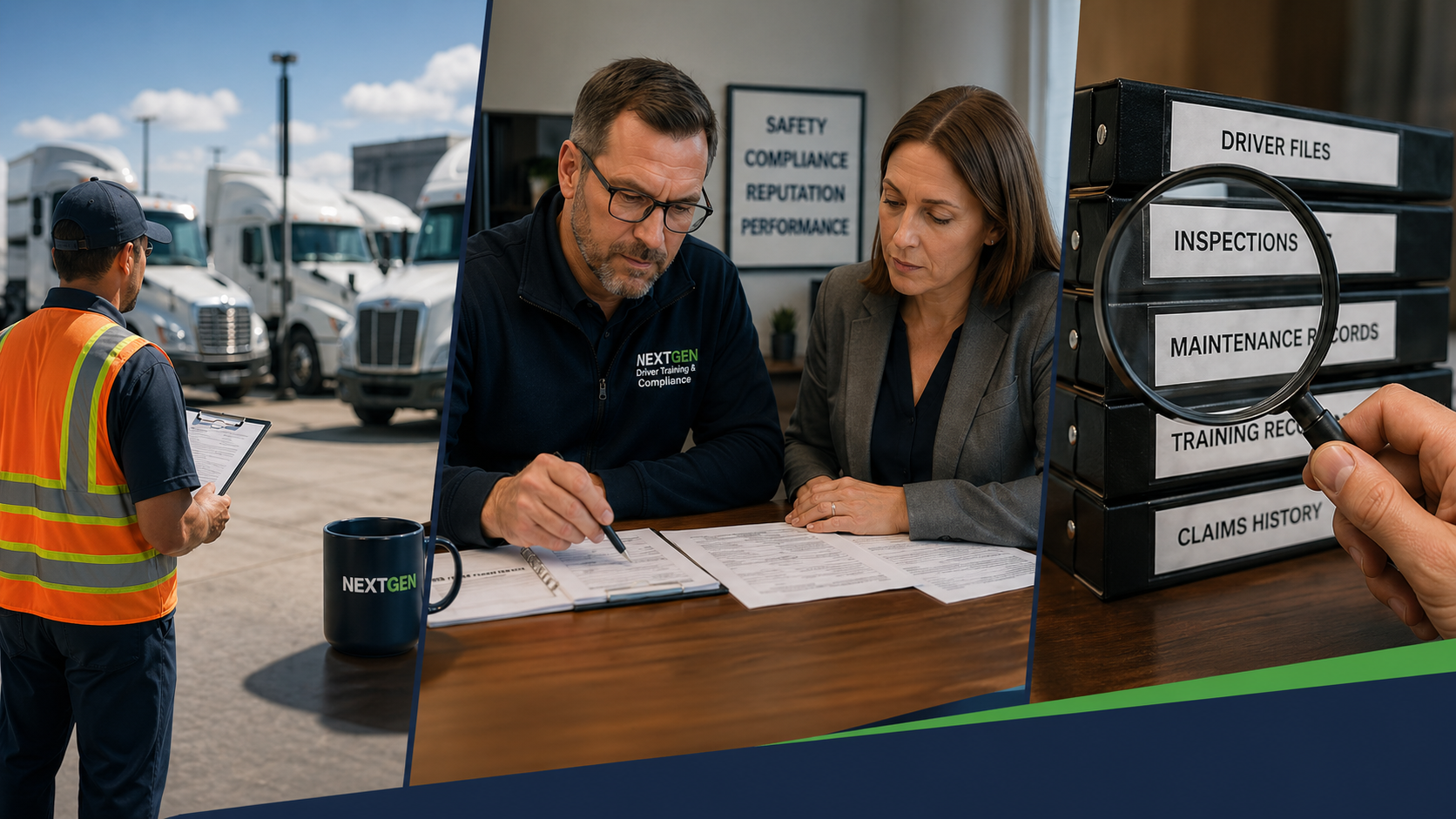
The Insurance and Customer Confidence Issue
A CVOR rating can become a business credibility issue.
Insurers are paying closer attention to fleet safety controls, driver oversight, maintenance practices, and claims exposure. Customers, especially larger organizations, are also becoming more cautious about who they allow on their sites, roads, and projects.
A fleet does not need to be massive to be exposed.
A small contractor with a few trucks and trailers can still create serious liability. A utility support fleet can still face roadside inspections. A landscape fleet running pickups, trailers, and equipment can still cross into regulated vehicle requirements. A local fleet can still be questioned after a collision.
The smaller the fleet, the less room there usually is for administrative failure.
One poor audit, one serious roadside issue, or one unresolved pattern can create pressure fast.
Why a Second Set of Eyes Matters
Internal reviews are useful, but they have limits.
Most companies review their records based on what they believe should be there. A third-party CVOR mock audit reviews records based on what may be challenged.
That distinction matters.
A qualified second set of eyes can identify gaps the company has normalized:
Records that exist but do not prove compliance
Policies that do not match actual operations
Driver files that appear complete but are weak under review
Maintenance documentation that does not clearly support control
Training records that do not prove competency
Repeated issues that suggest a management system weakness
CVOR exposure that ownership may not fully understand
This is where experience matters.
A mock audit should not simply tell a company whether paperwork is present. It should help ownership understand whether the business looks controlled, defensible, and audit-ready.
A CVOR Mock Audit Is a Business Risk Review
For NEXTGEN, a CVOR mock audit is not just a file check.
It is a business risk review through a transportation compliance lens.
The objective is to help the fleet understand where it may be vulnerable before the issue becomes expensive, public, or operationally disruptive.
That includes looking at the company’s CVOR profile, general safety exposure, documentation patterns, management oversight, and whether the fleet’s records support the way the company actually operates.
The goal is not to create more paperwork.
The goal is to create better control.

The Real Question for Fleet Owners
The question is not: “Do we have records?”
The better question is: “Would our records defend us if they were reviewed tomorrow?”
That is where many fleets get uncomfortable.
They may have binders.
They may have files.
They may have invoices.
They may have inspection reports.
They may have training documents.
But if those records are incomplete, inconsistent, outdated, or disconnected from daily operations, they may not protect the business the way ownership thinks they will.
Compliance confidence without verification is risk.
When a Fleet Should Consider a CVOR Mock Audit
A CVOR mock audit should be considered when:
The company has not had an independent compliance review in the last year
The fleet is growing
New drivers or owner-operators have been added
The company has had recent inspections, warnings, collisions, or convictions
Insurance renewal is approaching
The fleet is bidding work where safety performance matters
The business is unsure whether its CVOR profile reflects hidden exposure
Management wants a clear picture before MTO or an insurer asks harder questions
CVOR COMPLIANCE RISK ASSESSMENT
The NEXTGEN FIRM-5 assessment provides a comprehensive evaluation of essential compliance controls that directly affect inspection outcomes, CVOR performance, and preparedness for facility audits.
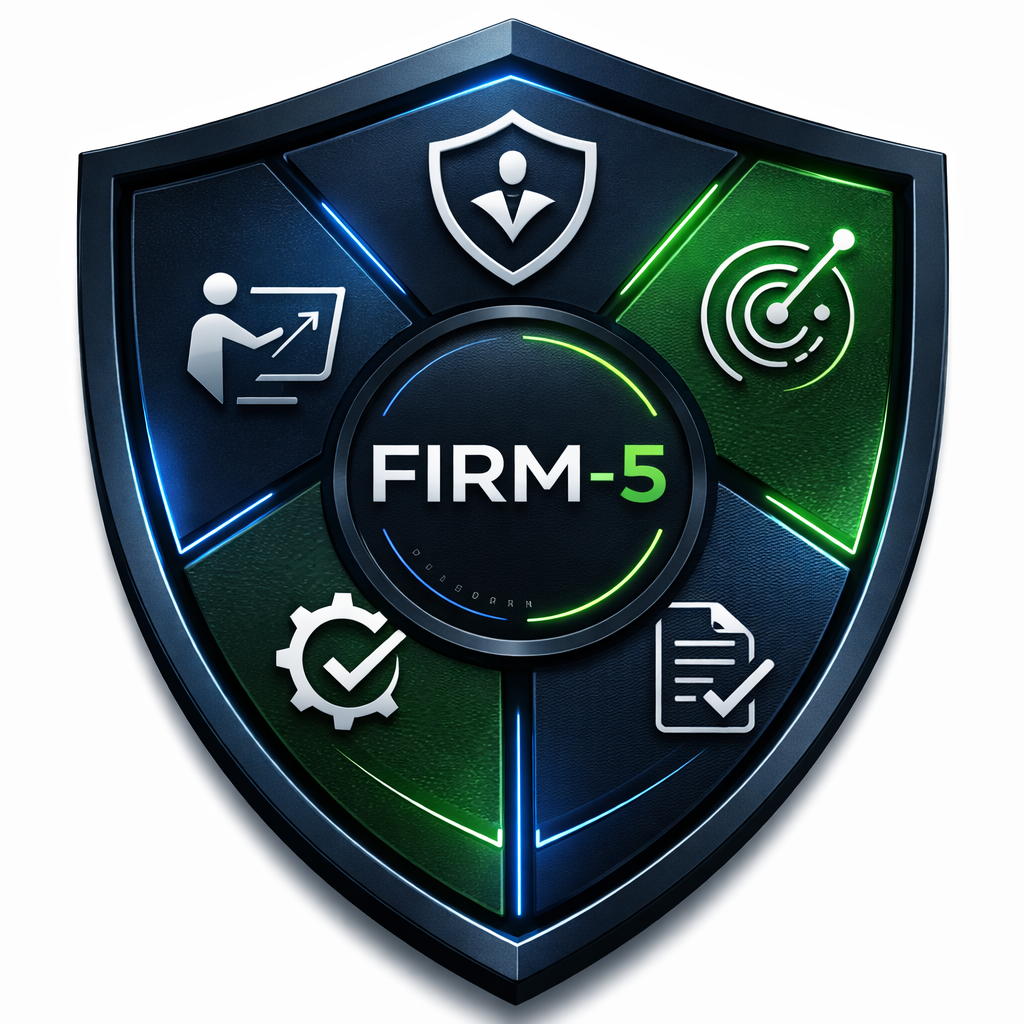
For small fleets, this can be one of the most valuable steps toward building a stronger safety management system.
NEXTGEN’s Role
NEXTGEN Driver Training & Compliance helps Ontario fleets identify compliance gaps before those gaps become enforcement, insurance, or business problems.
A CVOR mock audit gives ownership an independent overview of where the fleet stands, what areas may create exposure, and what corrective action should be prioritized.
This is not about fear.
It is about control.
A fleet that understands its risk is in a stronger position than a fleet that assumes everything is fine.
Final Thought
Your CVOR record tells a story. The question is whether that story shows control, oversight, and defensible compliance — or whether it shows gaps that could have been caught earlier.
Most fleets do not need more paperwork. They need a second set of experienced eyes to determine whether the paperwork they already have is protecting the business. Before enforcement, insurance, or a customer asks questions, ask them yourself.
Concerned your CVOR record may be telling a story you have not reviewed closely enough? NEXTGEN Driver Training & Compliance provides CVOR mock audits and compliance overview reviews for Ontario fleets that want a clearer understanding of their exposure before enforcement, insurance, or customer pressure creates bigger problems. Book a CVOR Mock Audit with NEXTGEN or complete the FIRM-5 CVOR Risk Assessment to identify exposure before it becomes a problem .