Call us: 905-922-1214

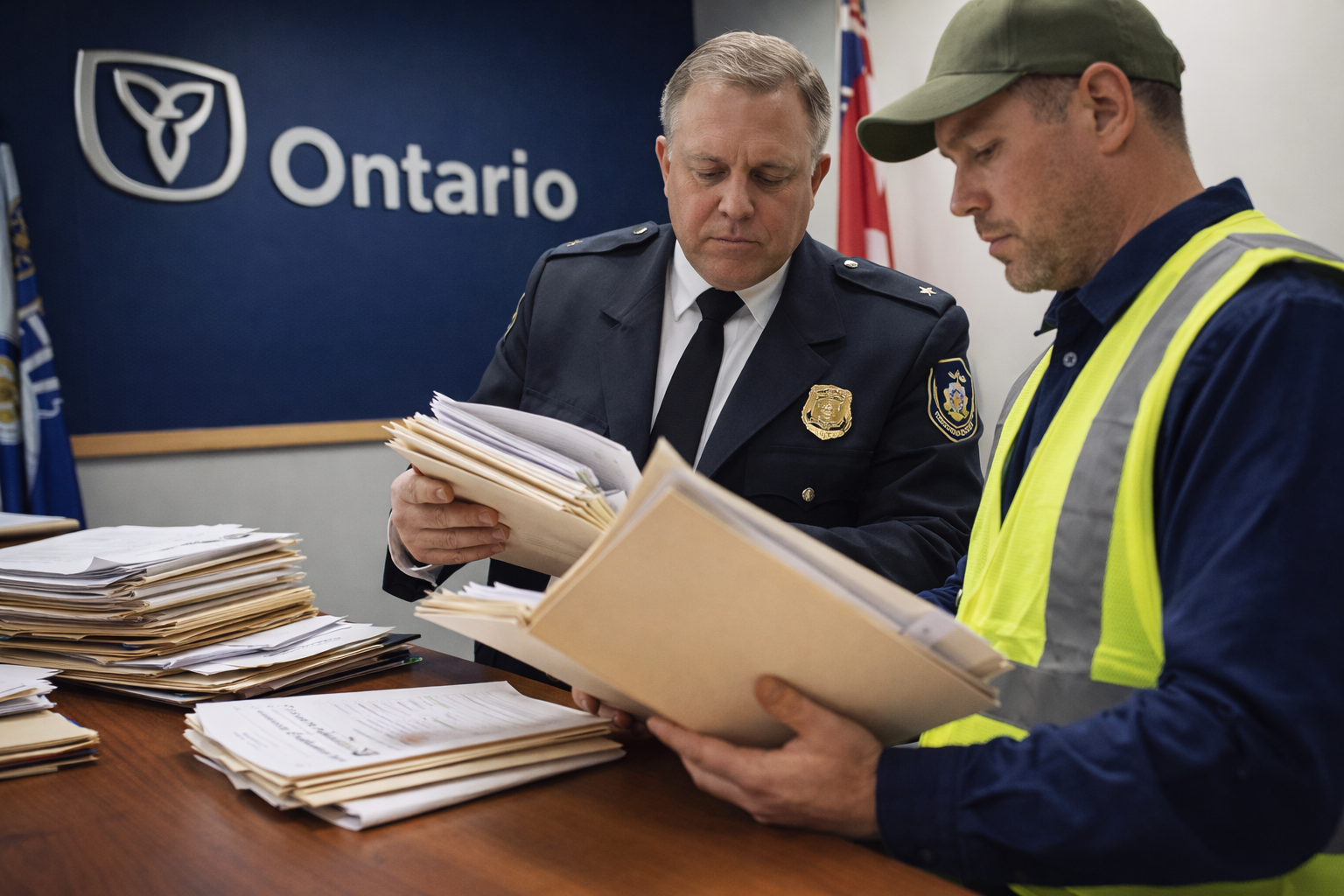
For many Ontario fleets, the first real sign of trouble is not a roadside inspection. It is the letter.
An MTO warning letter or intervention notice gets attention fast. It lands on the owner’s desk, raises questions internally, and often triggers panic. But the hard truth is this: by the time that letter arrives, your fleet’s exposure has likely been building for months. Your on-road profile has already been collecting convictions, inspections, reportable collisions, and other performance markers inside the CVOR system. Ontario’s CVOR program is built to monitor operators over a rolling two-year period, and ministry interventions can include letters, interviews, audits, and sanctions.
That means waiting for the Ontario MTO audit process to start is not a strategy. It is a gamble.
If your business is serious about protecting its operating authority, reducing insurance pressure, and maintaining customer confidence, proactive CVOR rating improvement is the only defensible path.
A CVOR Letter Does Not Start the Problem
Too many carriers treat a warning letter like the beginning of the issue.
It is not.
The CVOR system exists to monitor an operator’s safety performance through collisions, convictions, inspections, and facility audit results. The manual is clear that operators are expected to monitor their own CVOR record, thresholds, audit scores, and safety rating, then identify and correct problem areas before performance deteriorates further.
In plain language, the ministry expects you to know where your fleet stands before they contact you.
That matters because an intervention letter usually means you are already trending in the wrong direction. In fact, the manual explains that interventions are progressive and may include a warning letter, an interview, a facility audit, or sanctions depending on the level of risk the operator presents to road safety.
By the time the ministry formalizes concern, your operation has already produced a pattern.
The Hidden Cost of a Poor CVOR Safety Rating
A poor Carrier safety rating Ontario carriers receive does more damage than many owners realize.
The most obvious risk is regulatory. Poor performance can move a carrier from Satisfactory-Unaudited to Conditional, and from Conditional to Unsatisfactory if the situation keeps getting worse. The manual states that a carrier may be considered for a Conditional rating if its on-road performance exceeds 70% of its overall CVOR threshold or if it fails a facility audit. An operator that exceeds 100% of its threshold may face sanction activity.
But the hidden cost is usually business-related.
Insurance pressure rises
Insurers do not wait for a full collapse before reacting. A Conditional rating, deteriorating profile, or failed Facility Audit preparation effort signals poor oversight. Even before renewal, that can influence underwriting scrutiny, pricing, deductibles, and appetite.
Contract opportunities shrink
Sophisticated shippers, municipalities, utilities, and general contractors increasingly look beyond price. They want evidence that a carrier has control. If your CVOR safety certificate profile is weak, or your carrier safety rating Ontario status is Conditional, you may lose work before you even know you were being screened.
Roadside attention increases
The CVOR system is designed to support enforcement and intervention. Operators with poor performance become visible. More inspections mean more opportunities for defects, documentation gaps, hours-of-service issues, and load security problems to surface. Once that cycle starts, fleets often feed their own decline.
Reputation erodes internally and externally
A weak safety profile does not stay hidden forever. Drivers talk. Customers notice. Insurers react. Enforcement records build. The brand damage starts before the audit date.
Why Proactive Management Beats Reactive Fixes
Reactive fleets scramble.
Proactive fleets control the narrative.
The CVOR manual makes it clear that violation rates are based on a 24-month rolling period, using collisions, convictions, and inspections. Interventions and sanctions are triggered as operators reach different percentages of their threshold. That means the ministry is not judging a single bad day. It is watching for patterns.
This is exactly why waiting for an Ontario MTO audit letter is dangerous. You are not trying to fix one file. You are trying to reverse a trend that has already been measured.
A strong compliance system does three things before the ministry gets involved:
1. Finds repeat failures early
One missing daily inspection report is a training issue. Ten missing reports across multiple units is a system failure.
2. Corrects root causes, not just paperwork
You do not improve a CVOR profile by tidying binders after the fact. You improve it by correcting supervision, maintenance control, driver qualification oversight, and hours-of-service monitoring.
3. Builds a defensible operating record
The ministry’s facility audit framework focuses on qualifications, records and reporting, hours of service, and vehicle maintenance. If those systems are not being managed in real time, you are already behind.
Your Pre-Audit Self-Assessment Checklist
If you want real CVOR rating improvement, start by auditing yourself before the ministry does.
Review your driver qualification files
Confirm each file contains:
- Valid licence information
- Abstracts and required updates
- Hiring and qualification records
- Training records
- Disciplinary and corrective action records where applicable
Review hours-of-service controls
Check for:
- Missing logs or time records
- Form-and-manner errors
- Unidentified cycle issues
- Lack of operator review
- No documented follow-up on violations
Review daily inspection and defect reporting
Look at:
- Missing trip inspection reports
- Unrepaired reported defects
- Incomplete sign-offs
- Drivers failing to report recurring defects
- Dispatching equipment without proper review
Review maintenance files
Confirm you can produce:
- Preventive maintenance records
- Repair records
- Annual and periodic inspection documentation
- Evidence that defects were corrected before the vehicle returned to service
Review your CVOR abstract and threshold performance
Do not wait for someone else to tell you where you stand.
Review:
- Conviction trends
- Collision trends
- Inspection trends
- Threshold percentage
- Any developing pattern by driver, unit, yard, or supervisor
Review management response
Ask one hard question:
If the MTO walked in tomorrow, could you prove control, or would you be explaining gaps?
If the answer is unclear, your Facility Audit preparation is not where it needs to be.
Frequently Asked Questions
What is the biggest mistake fleets make with their CVOR rating?
Waiting until the ministry contacts them. By then, the operator is often already in an intervention stage or close to it.
Can a Conditional rating affect insurance and customer confidence?
Yes. Even where the manual focuses on enforcement and sanctions, the commercial reality is that a poor rating signals operational weakness. Insurers and contract clients often see it that way too.
What triggers a Conditional rating?
A carrier may be considered for a Conditional rating if it exceeds 70% of its overall CVOR threshold or fails a facility audit.
How do I improve a Conditional rating?
The manual notes that to move up from Conditional, the operator must maintain an on-road performance level of 60% or less of its overall threshold, and where the Conditional rating resulted from a failed audit, the carrier must pass a second audit after the minimum period.
What does the ministry look at in an audit?
The facility audit is a risk-based assessment focused on areas tied to collisions and non-compliance, including qualifications, records and reporting, hours of service, and vehicle maintenance.
Final Word: Do Not Wait for the Letter
A warning letter is not a wake-up call. It is evidence that the wake-up call was missed earlier.
If your fleet is serious about protecting its CVOR safety certificate, reducing regulatory exposure, and improving operational credibility, do not wait for the Ontario MTO audit process to choose the timing. Take control now.
NEXTGEN Driver Training & Compliance Inc. helps Ontario fleets with mock audits, CVOR profile reviews, Facility Audit preparation, and practical CVOR rating improvement strategies built for real-world operations.
Not sure where your fleet stands?
Take the NEXTGEN CVOR Risk Assessment
Most fleets do not need more generic compliance advice.
They need to know whether their current files, maintenance controls, driver oversight, and recordkeeping would hold up under scrutiny.