Call us: 905-922-1214

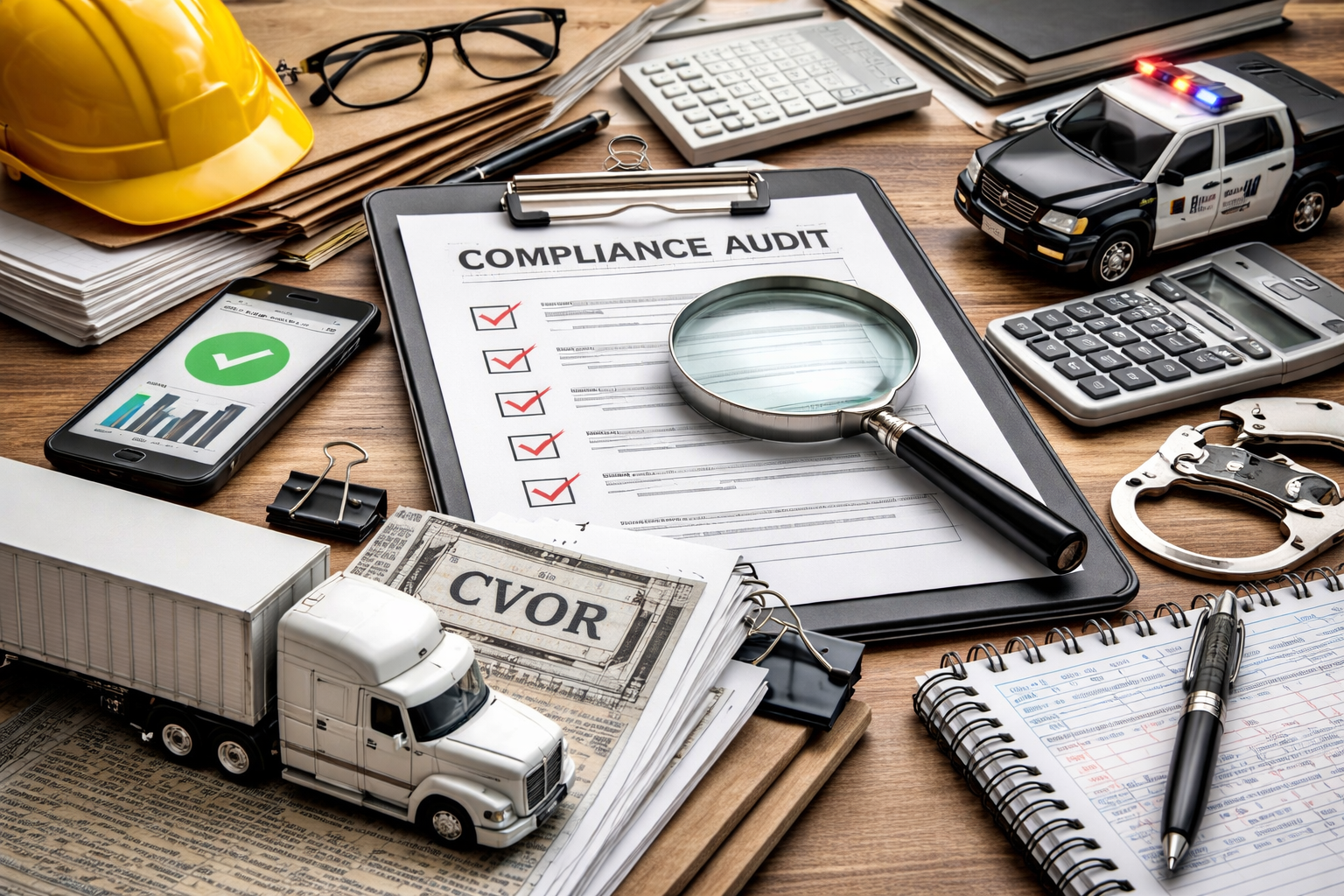
A Conditional safety rating is not just a ministry issue. It is a warning that your fleet’s control systems are no longer holding. Once a carrier is downgraded, the pressure starts building fast: insurance exposure, increased roadside attention, customer concern, and in serious cases, plate seizure or operating restrictions if the problems continue.
At NEXTGEN Driver Training & Compliance Inc., we work with fleets that need to move from reactive paperwork and hidden exposure to a structured, defensible compliance system.
Why does a fleet become Conditional?
A fleet is usually moved to Conditional when the ministry identifies evidence that the carrier is not effectively managing compliance. That can happen through poor on-road performance, repeated violations, collisions, or a failed CVOR facility audit.
What triggers a Conditional safety rating?
In our experience, the same weaknesses show up again and again:
- Incomplete or outdated driver qualification files
- Schedule 1 inspection records that are missing, inconsistent, or not followed up on
- Hours-of-Service violations and weak supporting documentation
- Preventive maintenance controls that are not being managed properly
- Policies that exist on paper but are not being enforced in the operation
- Repeated violations that point back to management failure, not just driver error
A Carrier Safety Rating is built on evidence. When your records, controls, and oversight cannot support your operation, the rating reflects it.
Will my insurance go up with a Conditional rating?
In many cases, yes.
A Conditional rated fleet is often seen by insurers as a higher-risk account. That can mean increased premiums, additional underwriting pressure, tighter renewal terms, or difficulty securing coverage at all. It can also affect how brokers, contractors, and customers view your operation.
This is why a Conditional rating should never be treated like something that will fix itself over time. It will not.
How to fix a Conditional rating: NEXTGEN’s 4-step recovery approach
At NEXTGEN, we focus on structured recovery, not guesswork.
1. Stabilize the fleet immediately
The first step is to stop further damage.
Immediate Actions:
- Pull and review your current CVOR abstract and safety performance data
- Audit all driver files for missing qualifications, abstracts, medicals, and training records
- Review Schedule 1 inspection practices and defect repair follow-up
- Check Hours-of-Service controls and supporting records
- Verify maintenance scheduling, inspection records, and repair documentation
- Assign internal responsibility for corrective action and oversight
This stage is about containment. If the system is leaking, you do not start with appearances. You start by closing exposure.
2. Identify the actual management failure
Most fleets focus too heavily on fixing isolated documents. That is not enough.
The real question is this: why did the system fail in the first place?
We look at:
- Who was responsible for oversight
- Whether records were being reviewed or just collected
- Whether policies were being enforced in real operations
- Whether drivers were trained, evaluated, and documented properly
- Whether maintenance and inspections were managed proactively or left to chance
If your operation depends on assumptions instead of controls, the Conditional rating is only the symptom.
3. Rebuild a defensible fleet safety management system
This is where real recovery happens.
NEXTGEN helps fleets put structure back into the operation through:
- Complete and current driver qualification file systems
- Written policies and procedures aligned with actual fleet activity
- Training records that demonstrate competency, not just attendance
- Maintenance and inspection controls with documented follow-up
- Internal audit systems that identify gaps before the ministry does
A trucking safety rating improves when the carrier can show repeatable oversight, documented controls, and management discipline.
How long does it take to fix a Conditional rating?
That depends on how far the breakdown has gone.
A ministry downgrade does not correct itself because time passes. The carrier needs to show proof that meaningful corrective action has been taken and sustained. Whether the issue arose through a CVOR facility audit, poor intervention results, or weak record control, the only path forward is documented improvement.
4. Prepare for ongoing scrutiny
Once a fleet is Conditional, it is under a different level of attention.
That means you need to be ready for:
- More roadside inspections
- Closer review of driver, vehicle, and HOS records
- Questions from insurers
- Higher expectations around management oversight
The objective is not just to “get through” the next review. The objective is to operate in a way that is defensible every day.
Final word from NEXTGEN
A Conditional rated fleet can recover, but only when management addresses the root problem: weak oversight, weak systems, and weak documentation control.
At NEXTGEN Driver Training & Compliance Inc., we help fleets correct those failures by building practical, audit-defensible systems that align with how the fleet actually operates.
If your fleet has been downgraded, or you are at risk of a Conditional status, this is the time to act. The longer the delay, the harder and more expensive the recovery becomes.
NEXTGEN helps fleets strengthen safety, simplify compliance, and restore operational control before more damage is done.
Find out where your fleet really stands.
Take the FIRM-5 CVOR Condition Risk Assessment to identify the hidden compliance gaps, oversight failures, and documentation weaknesses that can push a fleet toward a Conditional rating.