Call us: 905-922-1214

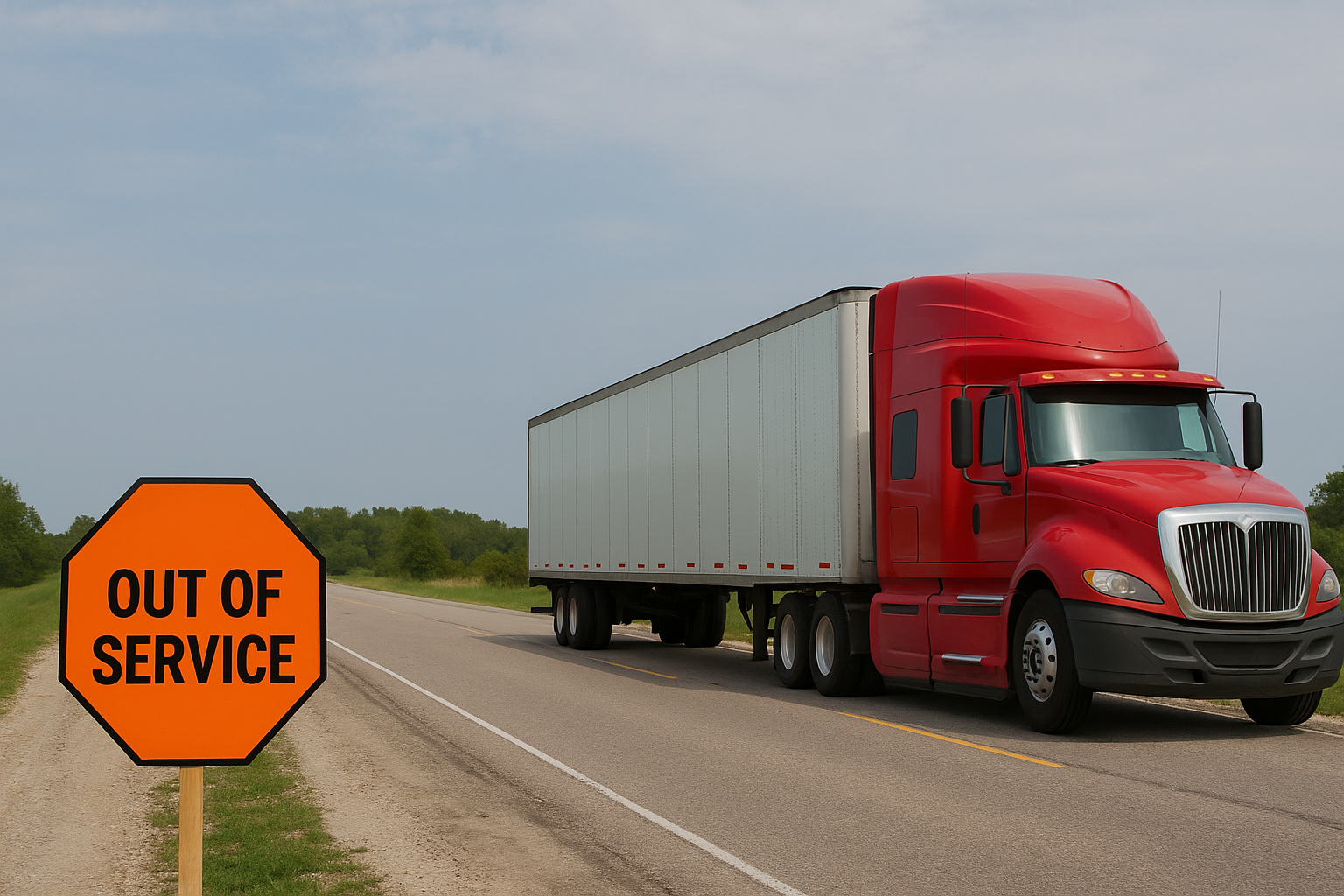
Ontario’s roads are some of the busiest freight corridors in North America, and this growing concern highlights the need for stronger compliance, as every Ontario truck safety blitz uncovers new violations. These roadside enforcement campaigns, carried out by the Ministry of Transportation (MTO) and police services, often uncover troubling results: a significant percentage of commercial vehicles pulled over are immediately prohibited from operating until defects or violations are corrected.
This raises the question: Why are so many commercial vehicles failing inspections? Let’s break down the leading causes and explore what carriers can do to avoid being sidelined.
“More than half the trucks fail in commercial vehicle safety blitz in eastern Ontario … overweight vehicles, expired annuals, emissions violations, pre-trip inspection violations, improper tires, brakes, and registrations” (Insauga)
Halton Region blitz: 82 inspections, 36 out of service (~44%)
What “Out of Service” Means
When a truck is placed out of service, it cannot move until serious safety violations are corrected. These aren’t minor paperwork mistakes — they’re defects or conditions that inspectors consider an imminent hazard to public safety.
The impacts go beyond the cost of repairs. Carriers also face:
- Lost productivity and delivery delays
- Negative impacts on their CVOR rating and insurance premiums
- Potential fines and reputational damage
During a blitz, enforcement is strict. Inspectors leave little room for error, meaning even small oversights can snowball into costly downtime.
Top Reasons for Ontario Truck Out-of-Service Violations During Safety Blitzes
From recent safety blitzes across Ontario, several common themes emerge:
1. Brake System Defects
- Air leaks, worn components, or inoperative brakes are among the most frequent OOS violations.
- Brakes are a truck’s most critical safety system — any defect here guarantees an out-of-service order.
2. Tire and Wheel Issues
- Bald treads, sidewall damage, mismatched tires, or loose wheel fasteners are common findings.
- Unsafe tires risk blowouts, loss of control, and rollover potential.
3. Load Securement Failures in Ontario Truck Safety Blitzes
- Missing or worn tie-downs, shifting cargo, or improperly blocked loads.
- Inspectors know poorly secured freight can become a deadly projectile in a hard stop.
4. Lighting and Visibility Defects
- Burnt-out headlights, brake lights, or missing reflectors reduce visibility.
- Inspectors treat these as major hazards, especially for night operations.
5. Expired or Invalid Credentials
- No valid CVOR, expired annual safety inspections, or improper permits.
- Even a well-maintained truck can be grounded if the paperwork isn’t in order.
6. Driver Licensing Issues
- Drivers operating with the wrong class of licence, suspended status, or missing documentation.
- These situations result in an immediate OOS order for both driver and vehicle.
7. Overweight Violations
- Exceeding axle or gross weight limits stresses the equipment and increases crash risk.
- Enforcement teams regularly use portable scales during blitzes.
8. Emissions and Exhaust Problems
- Defective emissions systems, missing mufflers, or excessive smoke can also lead to OOS.
Why Ontario Safety Blitzes Lead to High Out-of-Service Violations
Several factors make Ontario particularly vulnerable to high OOS rates during blitzes:
- Aggressive enforcement — multi-agency blitzes are designed to expose violations quickly and thoroughly.
- Aging fleets — some carriers operate older equipment where maintenance costs are often deferred.
- Operational pressure — with tight schedules and razor-thin margins, preventive maintenance sometimes slips.
- Training gaps — drivers may rush through pre-trip inspections, missing defects inspectors will not overlook.
- Parts shortages — difficulty sourcing tires, brake parts, or components can delay necessary repairs.
Many of the violations flagged in an Ontario truck safety blitz could be prevented through consistent pre-trip and post-trip inspections, strict maintenance cycles, and mock audits.
Preventing Out-of-Service Violations
Carriers can’t control when blitzes occur, but they can control their readiness. Best practices include:
- Daily pre-trip and post-trip inspections — thorough, not rushed.
- Strict preventive maintenance cycles — fix issues before they become blitz violations.
- Mock inspections — simulate blitz conditions to identify hidden weaknesses.
- Driver training — ensure drivers understand what inspectors look for and why.
- Documentation discipline — keep CVOR, annual safety certificates, and permits current.
- Load securement checks — verify aggregate working load limits and re-check after 50 miles.
Conclusion
Out-of-service violations aren’t random bad luck — they are the predictable result of overlooked maintenance, rushed inspections, or outdated compliance practices. Blitzes in Ontario shine a spotlight on these gaps, often pulling unsafe vehicles off the road before tragedy strikes.
For carriers, the lesson is clear: preventing Ontario truck out-of-service violations during safety blitzes starts with proactive safety — not reactive fixes. Investing in training, inspections, and preventive maintenance isn’t just about avoiding fines — it’s about protecting drivers, freight, and the public.
Because when enforcement officers set up a blitz, the trucks that are prepared roll on — while the rest are parked on the sidelines. With more blitzes on the horizon, carriers that tackle Ontario truck out-of-service violations before inspectors do will stay compliant, safe, and on the road.