Call us: 905-922-1214

“Most drivers never think twice about hauling a boat to the lake or loading a trailer with building materials. But in Ontario, if the combined weight of your truck and trailer crosses the Ontario 4500 kg truck law threshold, you may be operating a commercial motor vehicle — and that comes with responsibilities many people don’t realize until they’re facing fines, insurance issues, or roadside inspections.
Note: If you’re operating for business or under a company, commercial requirements—including CVOR—generally apply. “Personal use” exemptions are narrow and often misunderstood.
“Most drivers never think twice about hauling a boat or trailer — until they learn about the Ontario 4500 kg truck law that classifies their pickup as a commercial vehicle.”
Why Ontario’s 4,500 kg Truck Law Matters
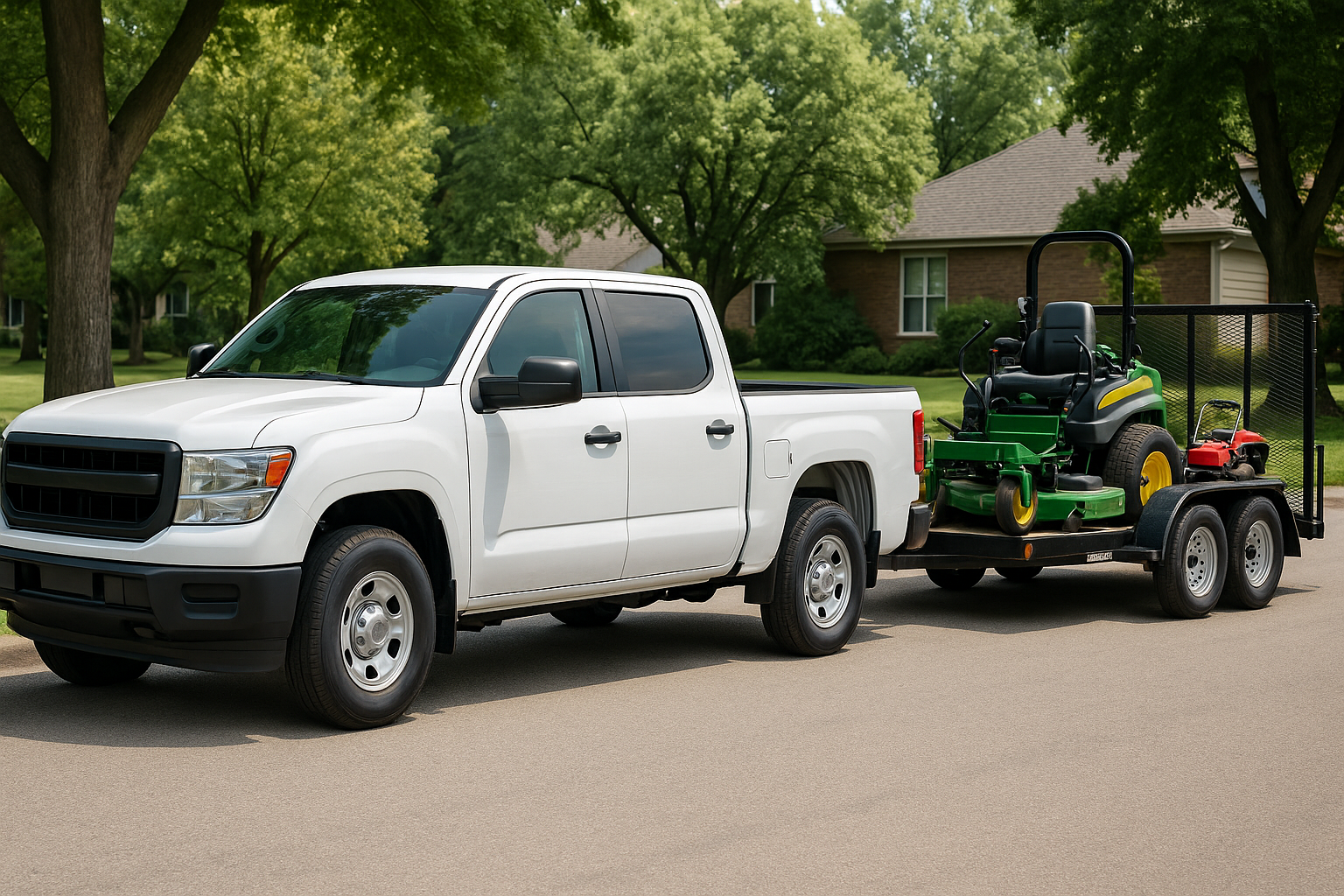
Ontario sets 4,500 kg (9,920 lbs) truck law as the threshold for commercial classification under the Highway Traffic Act. This isn’t just for big rigs: a ¾-ton pickup towing a utility trailer with an ATV or a small cube van packed with tools can easily cross the line.
Common Combinations That Catch Drivers Off Guard
- Pickup + boat trailer with fuel and gear
- Pickup + dual-axle utility trailer with ATVs or landscaping equipment
- Horse trailer with two horses and tack
- Flatbed or cube van hauling stone, cement, or dense building supplies
- Service van loaded with compressors, generators, and toolboxes
What looks like a “personal run” can legally be a commercial move.
Core Responsibilities Once You’re Commercial
1) Daily Vehicle Inspections
Complete a written inspection every 24 hours and carry it in the cab. Check brakes, tires, lights, steering, coupling devices, and load securement. Defects must be documented and corrected.
2) Hours of Service (HOS)
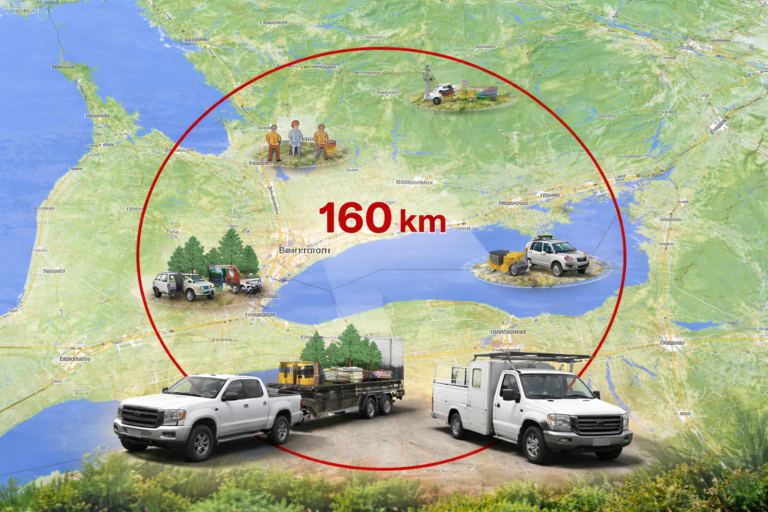
If operating beyond a 160-km radius of your home terminal (or otherwise not exempt), keep a logbook/ELD and follow daily/weekly driving and on-duty limits. Retain records.
3) Load Securement
Cargo must meet National Safety Code (NSC) Standard 10 requirements. Use rated securement devices and protect against shifting, loss, or leakage.
4) Transportation of Dangerous Goods (TDG)
If hauling fuel, chemicals, or other regulated products in certain quantities, you need TDG training, shipping documents, emergency response info, and (where applicable) placards.
Transportation of Dangerous Goods (TDG) Regulations
→ Full requirements for carrying dangerous goods, including placards and training.
CVOR Compliance Essentials (What Carriers Must Manage)
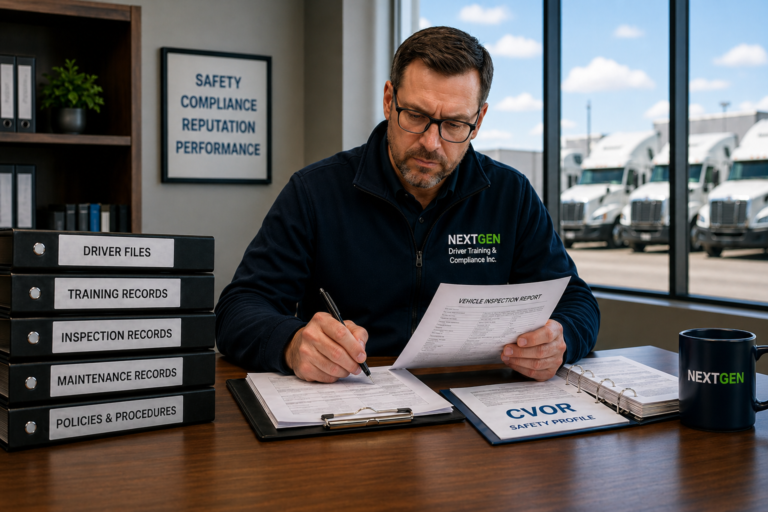
If you’re operating commercially, you likely require a CVOR (Commercial Vehicle Operator’s Registration):
- CVOR Certificate & Number
Keep your CVOR active and ensure your number appears on required documents. - Monitor Safety Performance
Track collisions, convictions, inspections, and defects that affect your CVOR rating. Investigate preventable events and implement corrective actions. - Policies & Training
Written policies for HOS, inspections, defect reporting/repair, load securement, impairment, distracted driving, and incident reporting. Provide and document training. - Record Retention
Maintain driver, vehicle, and HOS records for required periods; be audit-ready.
Vehicle Maintenance Records (Be Audit-Ready)
Keep a unit file for every truck and trailer that includes:
- Preventive Maintenance (PM) Schedule with intervals (time, km, or hours)
- Work Orders & Repair Invoices showing complaint, cause, and correction
- Inspection Reports (daily and periodic) and defect repair sign-offs
- Odometer/Hour Meter Logs to prove PM timing
- Parts/Component Records for critical items (brakes, tires, steering, coupling)
Tip: A simple PM wall chart + digital tracker (by unit) prevents overdue service.
Annual Safety Certificates (Yellow Sticker)
Most commercial trucks and trailers require an annual safety inspection under Ontario Regulation 611. Keep:
- The Annual Safety Certificate (and sticker) current for each unit
- The inspection report on file
- Proof of repairs for any noted defects
- For buses/specific vehicles, observe semi-annual requirements where applicable
Driver Files (What to Keep on Every Driver)
Create a standardized driver qualification file containing:
- License copy (class and endorsements) and current driver abstract
- Employment application, road test/evaluation, and orientation records
- Training certificates (HOS/ELD use, inspections, securement, TDG if applicable)
- Policy acknowledgements (HOS, impairment, phone use, incident reporting, etc.)
- Disciplinary/corrective action documentation and coaching notes
- Medical/fit-to-work documentation where required
Refresh abstracts periodically (e.g., at hire + annually/quarterly by risk).
What Happens If You Ignore It
- Fines & Out-of-Service at roadside
- Insurance complications or denied claims after a collision
- CVOR rating damage, which can trigger audits and increase premiums
Quick Self-Check Before You Roll
- Add your truck GVWR + trailer GVWR. If the total is ≥ 4,500 kg, assume commercial rules apply.
- Confirm CVOR status if operating for business.
- Carry a completed daily inspection; fix defects.
- Ensure annual safety (yellow sticker) is valid.
- Verify HOS/ELD requirements and load securement.
- Keep driver and vehicle files current.
People also ask
Q: Does the Ontario 4500 kg truck law apply to personal use?
A: If the vehicle is used strictly for personal, non-business purposes, some exemptions may apply. But enforcement officers often evaluate the load, purpose, and vehicle rating. When in doubt, follow commercial rules to avoid penalties.
Q: Do I need a CVOR for a pickup truck with a trailer?
A: If you operate for business and your combined weight is 4,500 kg or more, yes, you generally require a CVOR.
Q: What happens if I don’t follow the Ontario 4500 kg truck law?
A: You risk fines, out-of-service orders, higher insurance costs, and CVOR rating damage that can affect your business long-term.
Real-World Scenarios (Driver Relatability)
- Example 1: “A landscaper with a ¾-ton truck and trailer loaded with mowers often hits 5,200 kg — that means full compliance is required.”
- Example 2: “A weekend boater towing a loaded dual-axle trailer may be surprised to learn they’re legally in commercial territory.”
Final Word
Ontario’s 4,500 kg truck law threshold catches thousands of drivers off guard every year. If you’re using a pickup and trailer for business—or simply running heavier than you realize—commercial rules likely apply. The good news? With solid files, predictable maintenance, and clear policies, compliance is manageable.
NEXTGEN Driver Training & Compliance can set up your CVOR file system, driver files, PM program, and audit-ready documentation—so you can focus on running safely and profitably.
Unsure if the Ontario 4500 kg truck law applies to your operation? Contact NEXTGEN Driver Training & Compliance for a free consultation. We’ll review your trucks, trailers, and CVOR requirements so you stay compliant and avoid costly fines.