Call us: 905-922-1214


Tires are the unsung heroes of every fleet — the only point of contact between your trucks and the road. Under Ontario’s Schedule 1 – Daily Vehicle Inspection, they’re classified as a critical safety component, and for good reason. Tire defects continue to rank among the top CVOR violations and out-of-service (OOS) orders during roadside inspections across Ontario.
The takeaway? A single neglected tire can take an entire unit — or your safety rating — off the road.
Why Ontario Schedule 1 Tire Inspections Matter
Each rotation of a tire is a reflection of your company’s commitment to compliance and safety. Under NSC Standard 13 and O.Reg. 199/07, drivers must inspect tires daily before operating a commercial motor vehicle.
A missed defect isn’t just a driver issue — it’s a carrier liability. When enforcement finds a tread separation, low pressure, or cord exposure, both the operator and the company wear the consequence through CVOR points, potential fines, and insurance impact.
Schedule 1 Tire Defects — Major and Minor Conditions Explained
Under the HTA – Tires of Schedule 1, inspections must identify both minor and major defects:
Major Defects (Vehicle Out-of-Service)
- Tire in contact with another tire or any vehicle component
- Tire flat or unable to maintain air pressure
- Visible cord or belt material showing
- Tread or sidewall bulge, cut, or separation
- Re-grooved tire on a steering axle (unless permitted)
Minor Defects
- Tire appears underinflated
- Missing valve cap or slow leak
- Visible irregular wear pattern
A major defect requires the vehicle to be placed out of service until corrected. Drivers must record the defect and notify the carrier immediately — failure to do so can escalate into a compliance violation under the CVOR system.
Ontario Tire Management Programs — The Foundation of Fleet Compliance
A strong Tire Management Program goes far beyond daily inspections — it’s a preventive system that protects your fleet’s uptime, performance, and CVOR profile.
Fleet managers and company owners share equal accountability for the condition of every tire leaving the yard. The best programs incorporate:
- Documented tire inspection protocols for pre-trip, post-trip, and scheduled maintenance
- PSI verification logs and tread depth tracking sheets
- Rotation and replacement schedules based on mileage or wear indicators
- Vendor performance reviews and tire cost tracking
- Training for drivers and mechanics to identify wear patterns and early-stage failures
When tire management becomes policy, not practice, CVOR performance stabilizes. It also signals to insurers and regulators that the fleet is operating under a structured, auditable system of care.
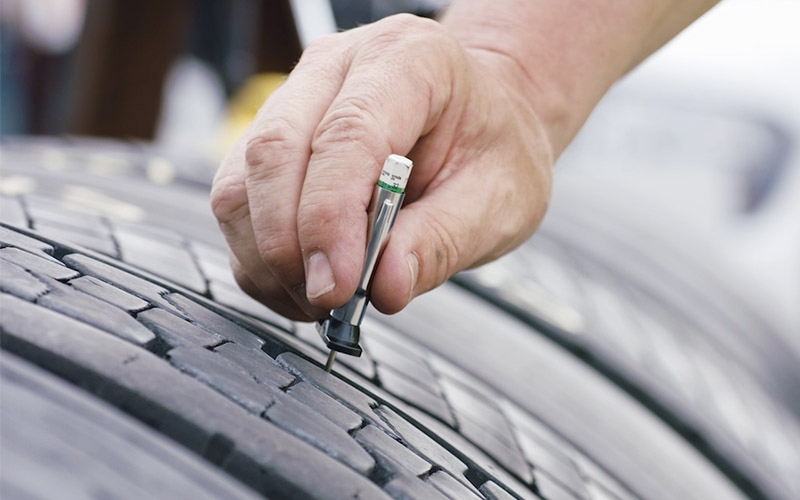
Fleet Accountability in Ontario Tire Inspections
Tire safety doesn’t stop at the driver level. It’s a culture of accountability that starts with leadership.
- The Fleet Manager ensures inspections are performed, logged, and reviewed.
- The Maintenance Department verifies air pressures, tread depth, and torque during service intervals.
- The Company ensures records are retained, audits are performed, and any recurring issues are addressed through policy review or vendor changes.
A proactive fleet leader doesn’t wait for enforcement to expose weak spots — they build systems that prevent them.
Next Steps — Strengthen Your CVOR with Tire Inspection Compliance
A compliant fleet integrates Schedule 1 daily inspections with a structured Tire Management Program. Together, they create a measurable, traceable system that supports both CVOR improvement and operational reliability.
🚛 NEXTGEN Driver Training & Compliance can help you:
- Develop or update your Tire Management Policy
- Create inspection forms and audit-ready documentation
- Train drivers and supervisors on Schedule 1 compliance
- Conduct a Tire Safety Audit to benchmark your current performance
Fleet safety starts where the rubber meets the road.
A structured tire management program is more than maintenance — it’s accountability.
📈 Let NEXTGEN help you integrate inspection compliance into your daily operations.
[Schedule Your Fleet Audit]